
Walnut, Oak, Rosewood and Padauk: A Designer’s Guide to Grain, Colour and Ageing
A practical guide to four woods found on our desks: what their grain looks like, how their colour changes over the years, and how to care for them.
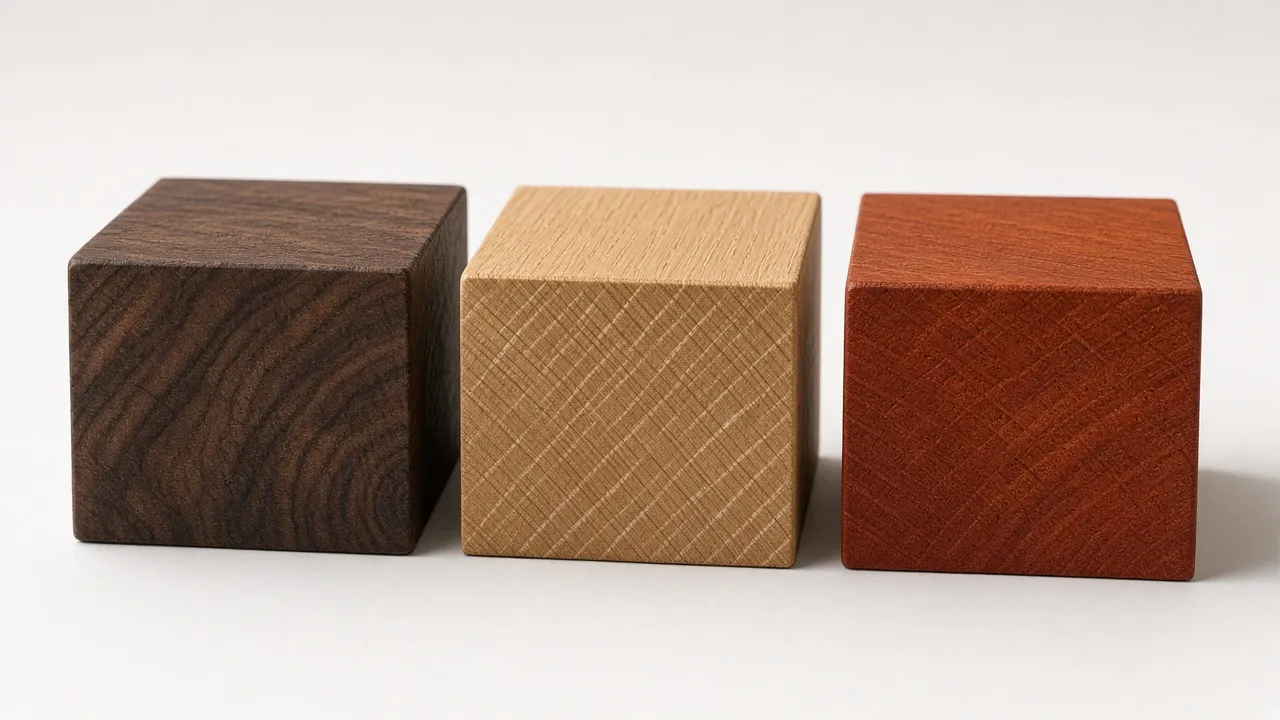
Wood is the only material on most desks that keeps changing after you buy it. Its colour drifts with light, its surface takes on the oils of your hands, and its grain reads differently in morning and evening light. Choosing a wood is therefore less like choosing a colour and more like choosing a companion for the next decade. Here is what we have learned about the four species that appear in our current collection.
First, a few terms
- Heartwood is the darker, denser core of the tree; it carries the colour a species is known for.
- Grain describes the direction of the wood fibres; figure describes the visible pattern on a surface.
- Photo-oxidation is the combined effect of light and oxygen that shifts wood colour over time.
Black walnut: dark, calm, and it lightens
American black walnut (Juglans nigra) is prized for a deep chocolate-brown heartwood with straight to gently wavy grain. It machines and finishes beautifully, which is why so many designers use it for small objects with precise edges.
Walnut is unusual among dark woods because it tends to get lighter, not darker. Furniture maker David Frisk describes walnut moving from a deep purple-brown towards a warmer golden-honey brown over roughly two to five years in indirect light, and faster in direct sun. Many owners love this: the purple cast fades and the wood becomes warmer and more three-dimensional.
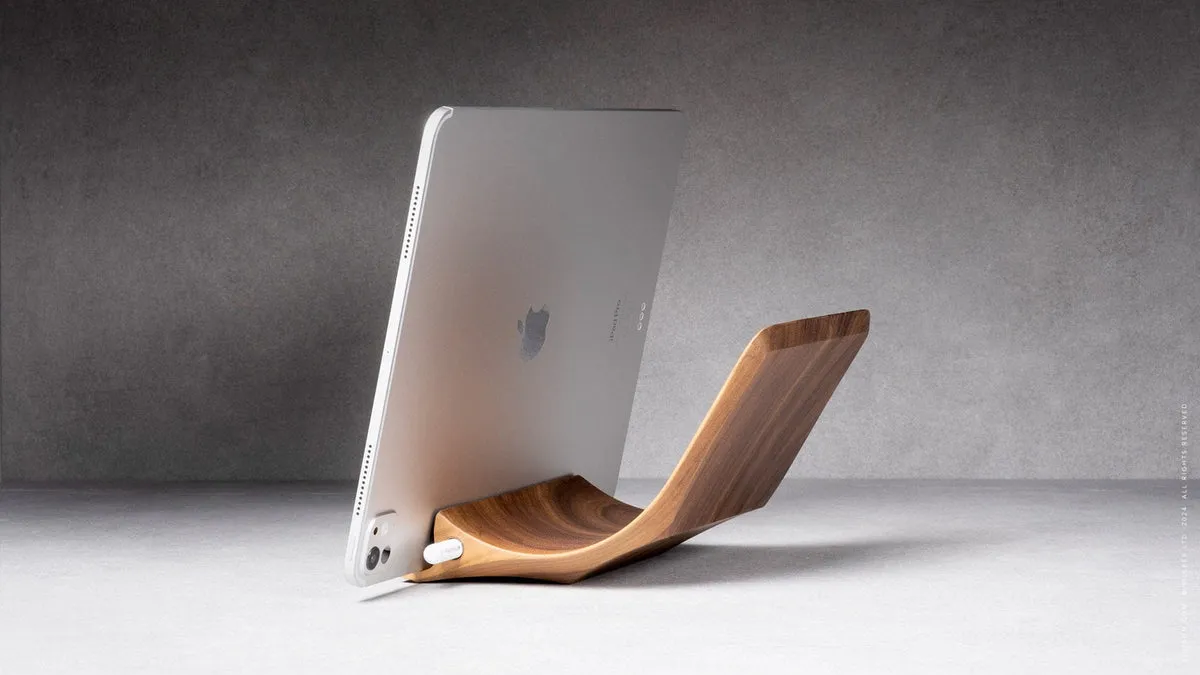
Walnut appears in our iPad Stand and in the Walnut Chair Tablet Stand, made from North American black walnut.
Oak: light, structured, and colourfast
Oak has an open grain with pronounced growth rings and, when quarter-sawn, the shimmering flecks known as medullary rays (we wrote about them in The Enchanting Dance of Medullary Rays in Oak Wood). It feels lively but orderly — a good partner for pale, Scandinavian-leaning interiors.
In ageing tests reported by WOOD Magazine, lighter species such as oak proved relatively colourfast compared with cherry or padauk. Over time white oak typically mellows towards a slightly deeper yellow-brown rather than changing character.
Rosewood (suanzhi): dense and dark-veined
“Rosewood” is a trade name used loosely for many dense, often fragrant hardwoods, most of them in the genus Dalbergia. In the Chinese hongmu tradition, the group called suanzhi (often translated as “blackwood” or “rosewood”) refers to certain Dalbergia species defined in the national standard GB/T 18107; the Wood Database has a clear overview of these categories. These woods are typically heavy, take a high natural polish, and show dark streaks against a red-brown ground.
Because many Dalbergia species are protected under CITES, international trade in them is regulated; when buying rosewood objects it is reasonable to ask about origin and documentation.
Padauk (huali): from fiery orange to deep brown
In the same hongmu system, huali refers to species of Pterocarpus — the genus that also gives us padauk. Freshly cut padauk is a vivid orange-red, which makes it one of the most dramatic woods in any workshop.
It is also one of the least colourfast. The Wood Database notes that padauk turns a very deep reddish brown over time, and WOOD Magazine’s tests showed it shifting to a dark, walnut-like brown in light. Think of the bright tone as a starting point; the settled colour is richer and quieter.
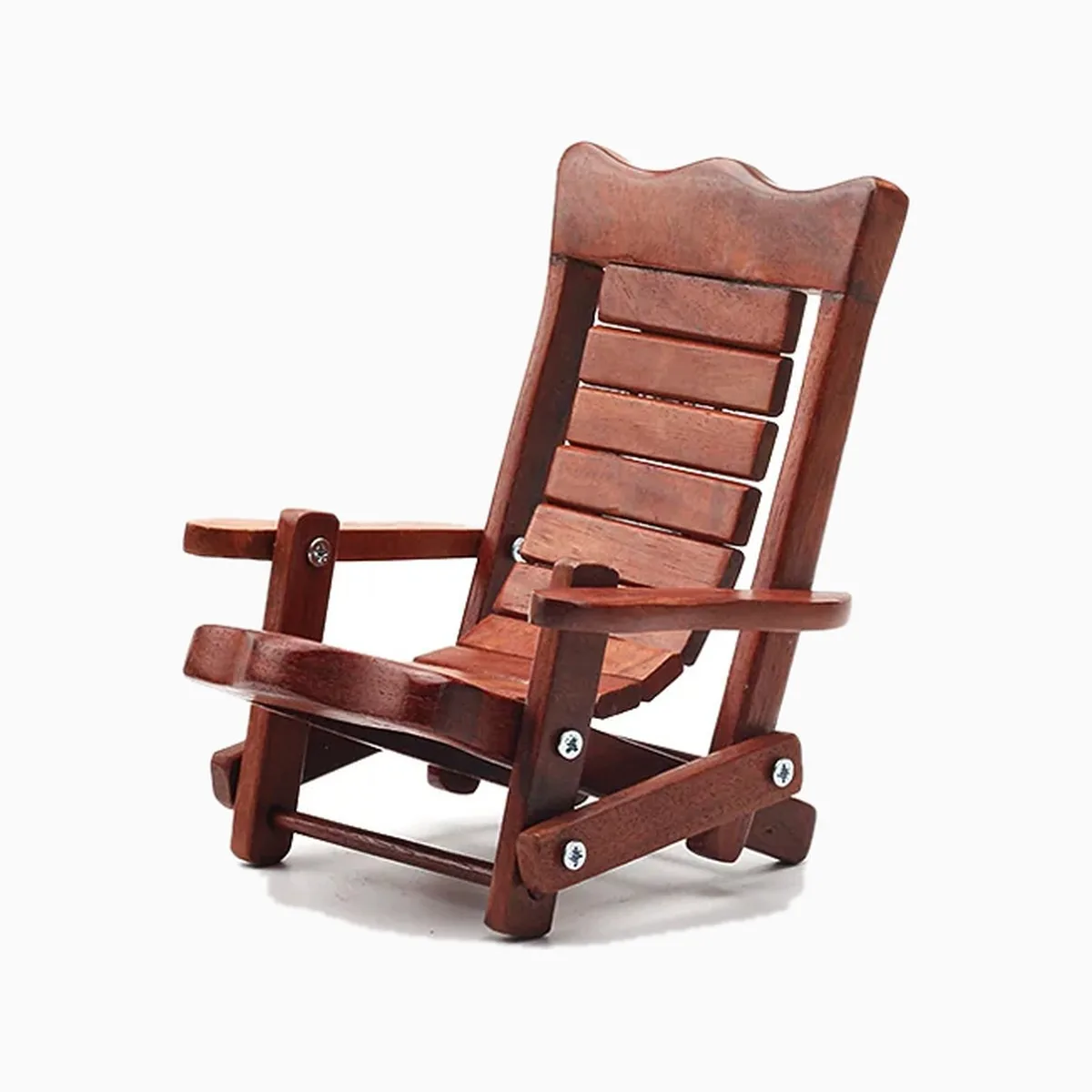
Our Chair Phone Stand – Solid Wood is made from solid rosewood in this huali/suanzhi family, so expect its warm red tones to deepen gradually.
At a glance
| Wood | Typical colour | Grain | Ageing in light |
|---|---|---|---|
| Black walnut | Chocolate to purple-brown | Straight to wavy, fine | Lightens towards golden brown |
| Oak | Pale straw to light brown | Open, pronounced rings, ray fleck | Relatively stable, slightly warmer |
| Rosewood (Dalbergia) | Red-brown with dark streaks | Dense, fine | Tends to darken |
| Padauk (Pterocarpus) | Bright orange-red | Interlocked, medium | Darkens markedly to deep reddish brown |
Caring for solid-wood desk objects
- Mind the window. Direct sun accelerates colour change and can leave a “shadow” where a phone or tablet always rests. Rotate objects occasionally.
- Dust dry, clean damp. A soft dry cloth is enough most days; for marks use a barely damp cloth and dry immediately.
- Avoid heat and standing water. Radiators and wet glasses are the usual culprits for cracks and rings.
- Refresh, don’t coat. Oiled surfaces can be revived with a thin coat of a suitable furniture oil or wax; always test on an inconspicuous spot first.
Every piece of solid wood is different, and that difference only grows with use. That is the point: an object that records the light of your room and the touch of your hands is one you are more likely to keep.
Choosing a wood for your desk
Colour is usually the first thing people notice, but it is worth thinking about how a wood will sit with everything else on the desk over time.
If your space is pale and Scandinavian
Oak is the natural choice. Its visible grain adds texture to white or light-grey surfaces without darkening the room, and its relative colour stability means the piece will look much the same in a few years. Walnut can work as a single contrasting accent — one dark object on a light desk often looks more deliberate than several.
If your space is warm, dark or traditional
Walnut and rosewood both shine against leather, brass and dark textiles. Walnut will drift gently towards honey; rosewood and padauk will deepen. Mixing two dark woods can look rich, but it usually helps to keep their undertones related — red with red, brown with brown.
If you like objects that visibly change
Padauk is the most dramatic of the four. Enjoy the bright early colour, knowing it will settle into a deep reddish brown. Placing it in moderate light rather than full sun gives a more even transformation.
Why solid wood matters for small objects
On a large table, veneer over a stable core is often a sensible engineering choice. On a small object, the case for solid wood is stronger: edges are handled constantly, corners get knocked, and the end grain is visible from every side. Solid wood can be lightly sanded and re-oiled if it gets marked; a thin veneer cannot. It also ages consistently all the way through, so a scratch reveals the same wood rather than a different material underneath.
Living with natural variation
No two boards are identical. Even within a single species, colour can range from light to dark, and grain can be straight, wavy or interlocked. Reputable makers say so in their product descriptions — and you should be wary of any natural wood object that promises a perfectly uniform appearance. Variation is not a defect; it is evidence that the object came from a tree.
Frequently asked questions
Does walnut get darker or lighter over time?
Black walnut generally becomes lighter and warmer over the years, moving from a deep, slightly purple brown towards a golden honey brown. The change is faster in direct sunlight and slower in indirect light.
Is oak more colourfast than walnut?
In general, yes. Light woods such as oak tend to be relatively colourfast and mainly mellow to a slightly warmer, more golden tone, while walnut and especially padauk show more visible change.
Why did my padauk object turn brown?
Padauk is known for shifting from bright orange-red to a deep reddish brown through exposure to light and air. This is a natural process and not a defect; a light sanding and re-finishing temporarily brings back a brighter surface.
How should I clean a solid-wood stand?
Wipe it with a soft dry cloth. For marks, use a barely damp cloth and dry immediately. Avoid harsh cleaners, standing water and placing the object next to a heat source.