
The Desk as Still Life: Styling a Workspace with Wabi-Sabi and Japandi Principles
Still-life painters spent centuries arranging a few objects on a table. Here is how their lessons, plus wabi-sabi and Japandi principles, translate to a modern desk.
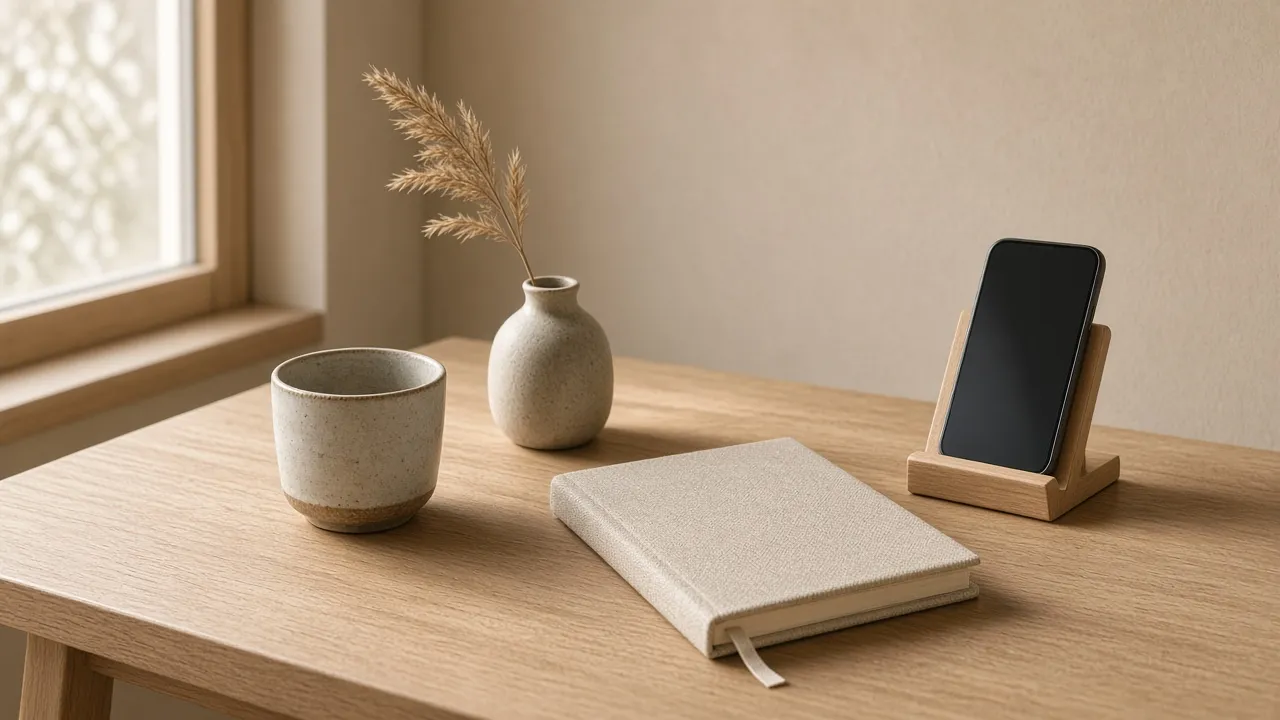
Long before “desk setups” filled social feeds, painters were arranging a handful of objects on a table and studying them for weeks. The still life was a discipline of choosing: which jug, which cloth, how much empty wall behind. The same discipline makes a workspace calmer today. A desk is a still life you live inside — and it rewards the same attention.
Two ideas worth borrowing
Wabi-sabi
Wabi-sabi is a Japanese aesthetic sensibility that finds beauty in things that are imperfect, impermanent and incomplete. Leonard Koren’s short book Wabi-Sabi for Artists, Designers, Poets & Philosophers (1994) remains one of the clearest introductions in English. In practice it means valuing an uneven glaze, the patina on wood, the slight asymmetry of something made by hand — and resisting the urge to make everything new and identical.
Japandi
Japandi is a more recent interiors term blending Japanese restraint with Scandinavian warmth and practicality. Its hallmarks are a muted palette, natural materials such as wood, linen, paper and ceramic, low visual clutter and furniture with clear, simple lines. It is less a set of rules than a temperament: calm, functional, warm.
Five principles for a desk still life
1. Start with emptiness
Clear the desk completely. Return only what you use daily. Negative space is not wasted space; it is what lets each object be seen. A good test: you should be able to put down a sheet of paper without moving anything.
2. Limit the palette
Choose one dominant wood tone and one or two neutrals — oak with off-white, or walnut with warm grey. Technology is usually silver, black or white; let it be one of the neutrals rather than fighting it.
3. Lift screens off the surface
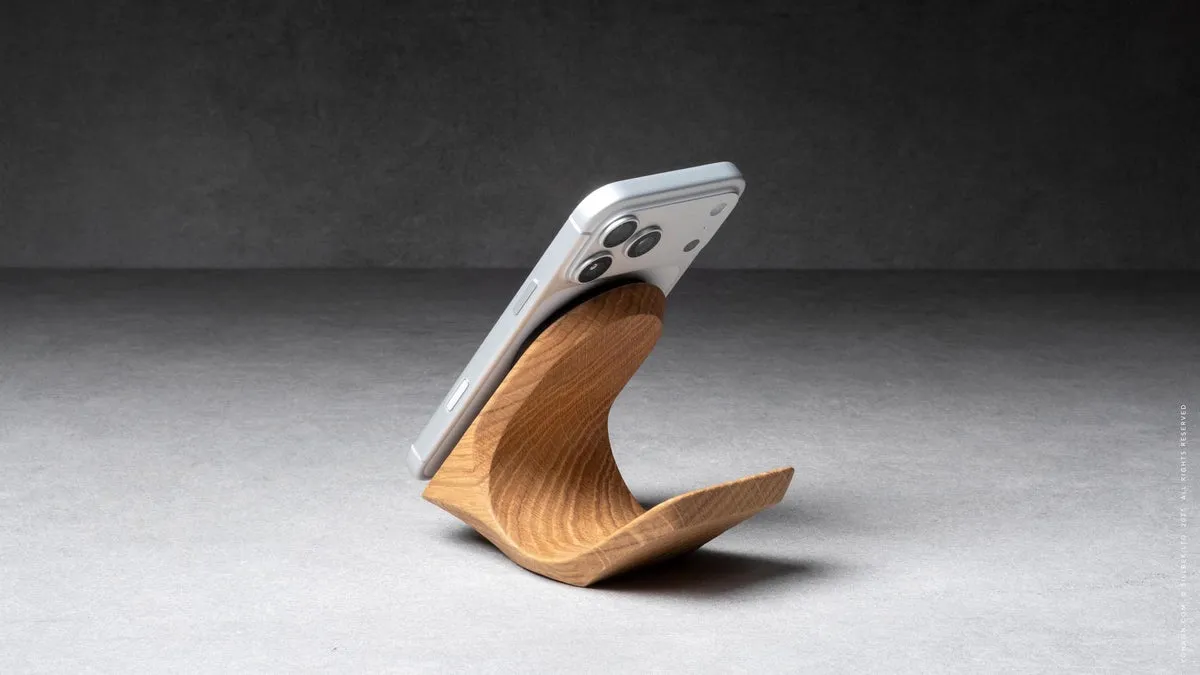
Phones and tablets lying flat are visual noise and ergonomic compromise. Standing them up clears the work surface and turns a screen into one deliberate element of the composition. Our iPhone Stand and iPad Stand do this with a single curve of wood; the Walnut Chair Tablet Stand adds a touch of play with its miniature bench form.
4. Mix textures, not colours
Still-life painters created interest through contrasting surfaces: glazed and matte, smooth and woven, hard and soft. On a desk, pair wood with linen, stone or ceramic. A rough cup beside a smooth stand reads as richer than two colours ever could.
5. Allow one object without a job
Every still life has its small indulgence — a lemon peel, a shell. On a desk it might be a stem of dried grass, a stone or a miniature chair. Our Chair Phone Stand sits at that border: when the phone is in your hand, it is simply a tiny piece of furniture.

Light is the most important material
Painters chose north light because it changes slowly and casts soft shadows. If you can, place the desk perpendicular to a window so light falls across the surface rather than straight into the screen. Warm-white lamps in the evening keep wood tones honest. Remember that strong direct sun will also age wood faster — part of the wabi-sabi story, but worth knowing.
A quick arrangement recipe
- Screen or laptop raised to eye level, centred on you.
- Phone or tablet standing on one side, within reach but outside the main work zone.
- One natural-material vessel (cup, pen pot, small vase) on the opposite side to balance it.
- A single notebook, closed when not in use.
- Cables gathered and hidden; nothing else on the surface.
Let it evolve
Wabi-sabi reminds us that a desk is never finished. Wood darkens or mellows, a cup chips, the season changes the light. Rather than resetting to a showroom state, edit occasionally: remove one thing, add one thing, and look again — the way a painter would.
Lessons from the still-life painters
Look at almost any celebrated still life and you will notice the same choices. The objects are few and ordinary: a jug, a bowl, a piece of fruit, a cloth. They are arranged with deliberate gaps, often in a loose triangle, so the eye moves from one to the next. Light comes from one side, so every object casts a clear shadow and reveals its form. Nothing is there by accident.
Those choices translate directly to a desk. Few, ordinary, useful objects. Space between them. One clear light source. When a desk feels chaotic, it is usually because one of those rules has been broken — too many things, no gaps, or light coming from everywhere at once.
Composition: the loose triangle
Place your largest element — usually a monitor or laptop — at the back and centre. Put a medium element, such as a tablet on a stand, on one side, and a small element, such as a cup, on the other. The result is a stable, balanced triangle that leaves the front of the desk free for work. Asymmetry is fine, even desirable; perfect symmetry tends to feel stiff.
Materials that work together
- Wood brings warmth and changes gracefully with time.
- Linen and wool soften sound and give the hand something tactile to rest on.
- Ceramic and stone add weight and a cool surface temperature.
- Paper — notebooks, prints, a single postcard — brings a human trace.
Plastic and glossy surfaces are not forbidden, but they read as louder. If a device is glossy, give it a matte, natural surround.
Small rituals that keep the desk calm
A still life is static; a desk is not. The calm comes from small habits: returning the phone to its stand rather than leaving it face up on a pile of papers, clearing the surface at the end of the day, keeping only one notebook open. Objects with a clear “home” make these habits effortless, which is one reason dedicated stands and trays are worth having even on a minimal desk.
Seasonal edits
Japanese interiors traditionally change with the seasons, and the idea works at desk scale too. Swap a branch of spring blossom for summer grass, autumn leaves or a winter stone. The structure of the desk stays the same; one small element marks time and keeps the arrangement alive.
Frequently asked questions
What is the difference between wabi-sabi and Japandi?
Wabi-sabi is a traditional Japanese aesthetic philosophy that values imperfection, impermanence and simplicity. Japandi is a contemporary interiors style that blends Japanese restraint with Scandinavian warmth and practicality, often using wabi-sabi ideas in its choice of materials.
How many objects should be on a minimal desk?
There is no fixed number, but a useful guide is to keep only what you use every day plus one personal object. If you can lay down a sheet of paper without moving anything, the desk has enough free space.
Which wood suits a Japandi desk?
Light oak is the most typical choice for its pale tone and visible grain, but walnut works well as a single darker accent. Keeping to one or two wood tones helps the space feel calm.
Why use a stand for a phone or tablet?
A stand lifts the screen off the work surface, makes it easier to read at a glance and keeps the desk visually clearer than a device lying flat among papers.