
Slow Design: Craftsmanship, Joinery and the Case for Objects That Last
Mass production made good design affordable. Slow design asks what we lost on the way — and how joinery, finishing and material choice still separate objects that last from those that don’t.
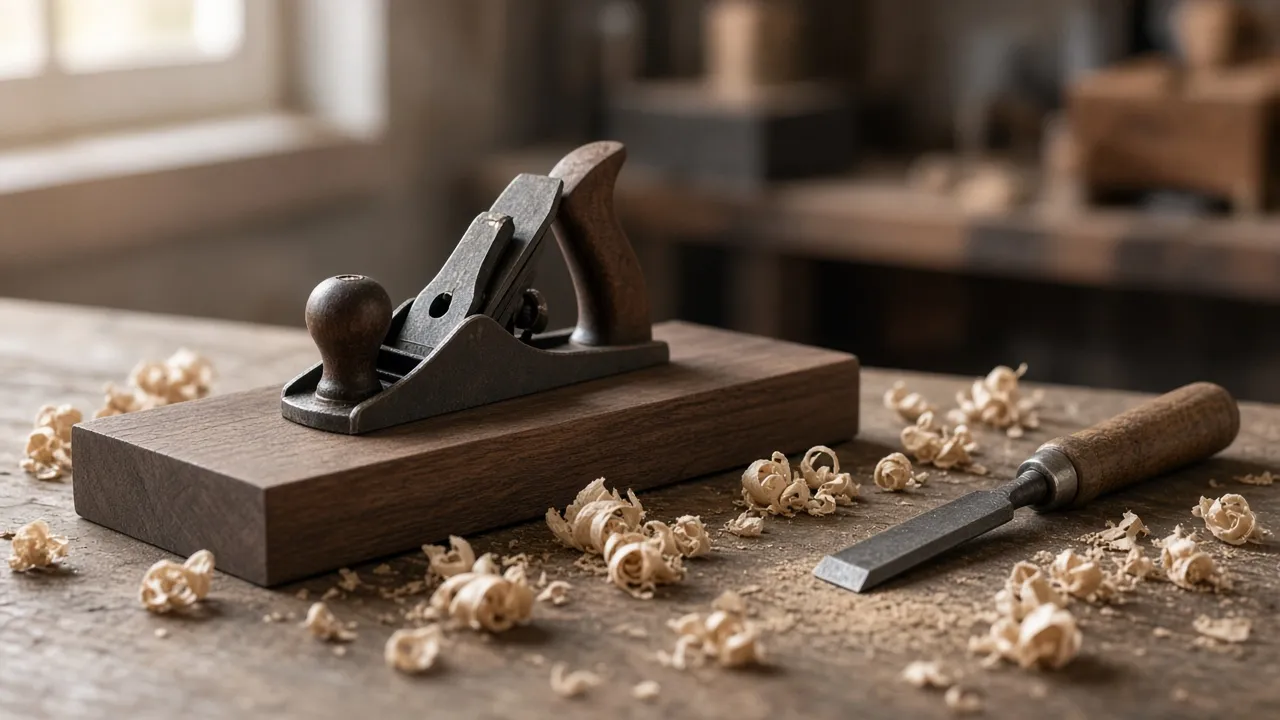
It would be easy to frame craftsmanship and industry as enemies. History says otherwise. The Thonet No. 14 was one of the most successful industrial products of the nineteenth century, and it was also a triumph of wood craft. The real question is not hand versus machine, but whether an object is designed and made with enough care to deserve a long life.
What “slow design” means
Slow design borrows its name from the slow food movement. It favours fewer, better objects; materials that age well; processes that can be understood and repaired; and attention to the whole life of a product, from the forest to the day it is passed on. It is less a style than a set of priorities.
Practically, that tends to mean solid materials rather than laminates, construction that can be inspected, finishes that can be renewed, and designs restrained enough not to look dated in five years.
Joinery: how wood holds wood
Before screws were cheap, furniture makers developed joints that lock timber together mechanically. Many are still the best answer today.
Mortise and tenon
A projecting tongue (tenon) on one piece fits a cavity (mortise) in another. It is the backbone of frame furniture across cultures. Classical Chinese chairs famously relied on interlocking mortise-and-tenon systems; as Phillips notes in its essay on Wegner’s “Chinese” armchair, a chair of this kind in the Designmuseum Danmark collection gave Wegner an example of rational, integrated construction.
Wedged through-joints
Windsor makers drove legs and spindles through the seat and spread them with wedges, so the joint tightens under load. The Regional Furniture Society describes the Windsor as a stool with a spindled back held together with wedges and pegs.
Dovetails and finger joints
Interlocking fan-shaped or square fingers resist pulling apart and are mainly used for boxes and drawers. A crisp dovetail is still one of the quickest signals of careful work.
Bending instead of joining
Sometimes the most elegant joint is no joint. Steam-bent or laminated curves let a single piece of wood do the work of several. Our iPhone Stand, iPad Stand and MacBook Stand are built around one continuous curve — no visible fixings, just wood shaped to carry the device.

Finishing: the last ten percent
Finishing is where many products are quietly cheapened. A sprayed plastic lacquer is fast and uniform but sits on top of the wood; when it scratches, it is hard to repair. Oil and wax finishes penetrate the surface, feel like wood rather than plastic, and can be refreshed with a light sanding and a new coat. Grovemade’s journal makes a similar case for hand-applied oil in small-batch production.
How to recognise a well-made wooden object
- Solid, not skin. Look at edges and undersides: does the grain continue around corners, or is there a thin veneer line?
- Grain follows the form. Long, thin parts should run along the grain, not across it.
- Clean transitions. Joints and edges are crisp, with no filler or gaps.
- Weight and stability. A small object in dense hardwood feels reassuringly heavy and does not tip.
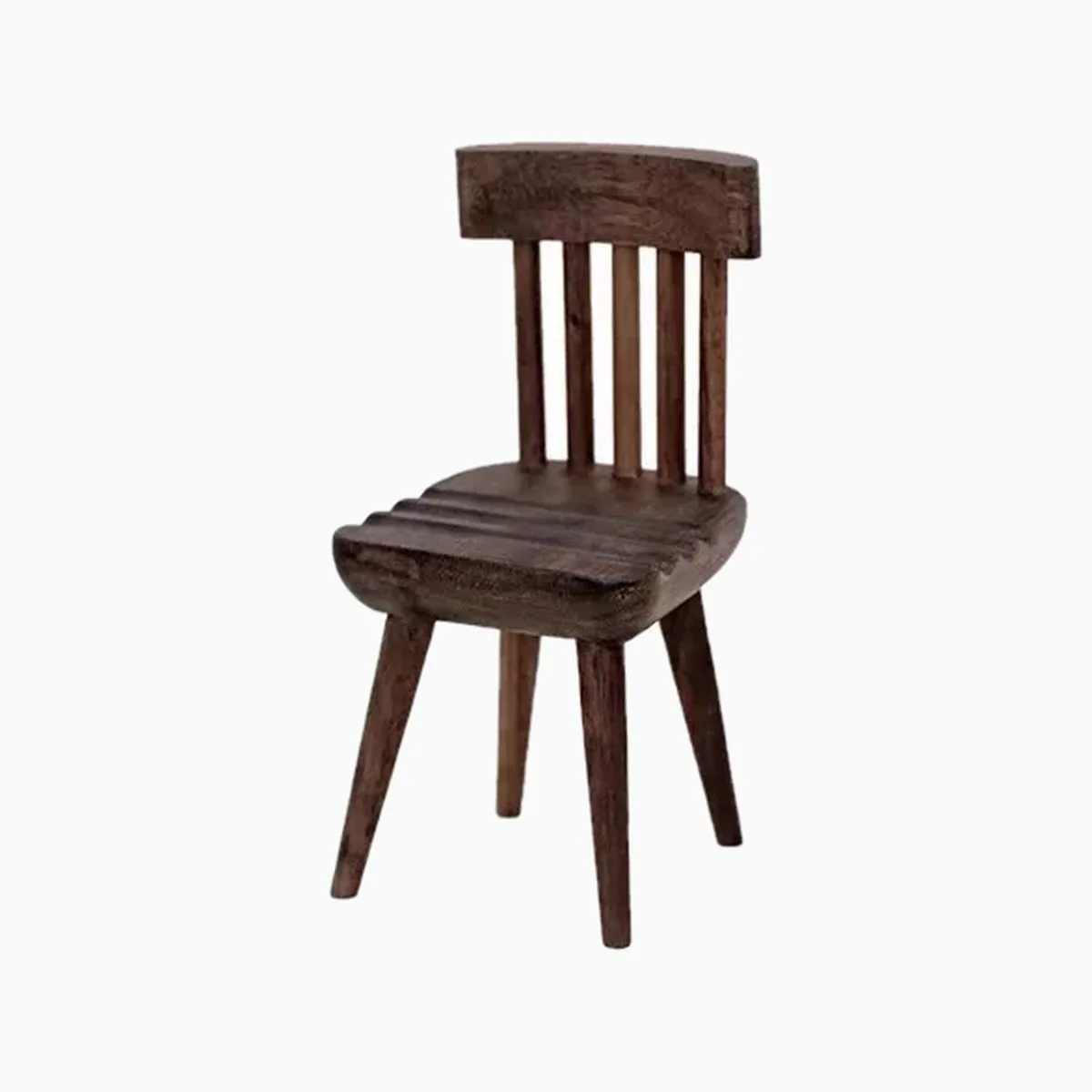
- Honest description. Makers who name the species, size and any natural variation are usually confident in their work. We note, for example, that the dimensions of our Chair Phone Stand are measured by hand and may vary slightly.
Mass production isn’t the villain
Thonet proved that standardised parts and clever logistics could put good design into millions of homes. Carl Hansen & Søn has produced Wegner’s Wishbone Chair since 1950, combining machine processes with handwork such as the woven seat. The lesson of slow design is not to reject industry, but to insist that speed never decides the quality of material, joint or finish.
Buying slowly
The most sustainable object is the one you keep. Before buying, ask: will I still like this when the wood has changed colour? Can it be cleaned, refinished or repaired? Does it do one thing well? If the answer is yes, it is probably worth the wait — and the price.
The hidden costs of fast objects
Cheap objects are rarely cheap over their lifetime. A stand that wobbles gets replaced; a lacquer that chips cannot be repaired; a laminate that peels goes to landfill. Each replacement repeats the cost of materials, manufacturing and shipping. A well-made wooden object, by contrast, can be cleaned, re-oiled and kept for decades, and its price is spread across all of those years of use.
There is also a quieter cost: attention. Objects that are poorly made tend to demand it — rattling, slipping, collecting fingerprints on glossy surfaces. Objects that are well made tend to disappear into use, which is exactly what most of us want from the tools on our desks.
Craft at every scale
Craftsmanship is sometimes associated only with large, expensive furniture, but small objects are where it is easiest to judge. On a desk-sized piece you can see every edge at once, feel the weight in your hand and inspect each joint from a few centimetres away. There is nowhere for shortcuts to hide.
Questions to ask a maker
- What species of wood is this, and is it solid throughout?
- How is it finished, and can the finish be refreshed at home?
- Where and how is it made?
- What natural variation should I expect in colour, grain or size?
Clear answers to these questions are usually a good sign. Vague ones — or answers that promise perfect uniformity in a natural material — are worth a second look.
Designing for the second owner
A helpful way to think about slow design is to imagine the object’s second owner. Will it still work, still look good, still be repairable when it is handed on? Thonet chairs, Windsors and Wegner’s chairs are bought and sold second-hand every day, often more than a century after they were made. That is the ultimate test of design: not how an object looks on the day it is unboxed, but whether someone still wants it decades later.
Frequently asked questions
What is slow design?
Slow design is an approach that favours fewer, better-made objects, durable materials, repairable construction and consideration of a product’s entire life, rather than fast, disposable consumption.
Is a mortise-and-tenon joint stronger than screws?
A well-fitted mortise-and-tenon joint distributes load across a large glued surface and has been used for centuries in furniture frames. Screws are quicker and can be strong too, but traditional joinery is often more durable in wood that moves with humidity.
Why are oil finishes preferred for wooden objects?
Oil and wax finishes penetrate the wood, keep a natural feel and can be renewed at home with a light sanding and a fresh coat. Film finishes such as lacquer are uniform and protective but harder to repair once damaged.
How can I tell if an object is solid wood?
Check edges, corners and the underside. In solid wood the grain continues around corners and end grain is visible; with veneer you may see a thin line where a surface layer meets a different core.